
Artificial Intelligence (AI) is everywhere—even in the patrol car. 911 centers use speech-to-text so call-takers see the word “gun” the moment someone says it. Patrol sedans flag stolen plates automatically. Acoustic sensors hear a gunshot and push a map pin in seconds.
But every new algorithm also raises hard questions about bias, transparency and civil rights. Is AI the officer’s best partner—or a step toward constant surveillance? Let’s break it down in plain language.
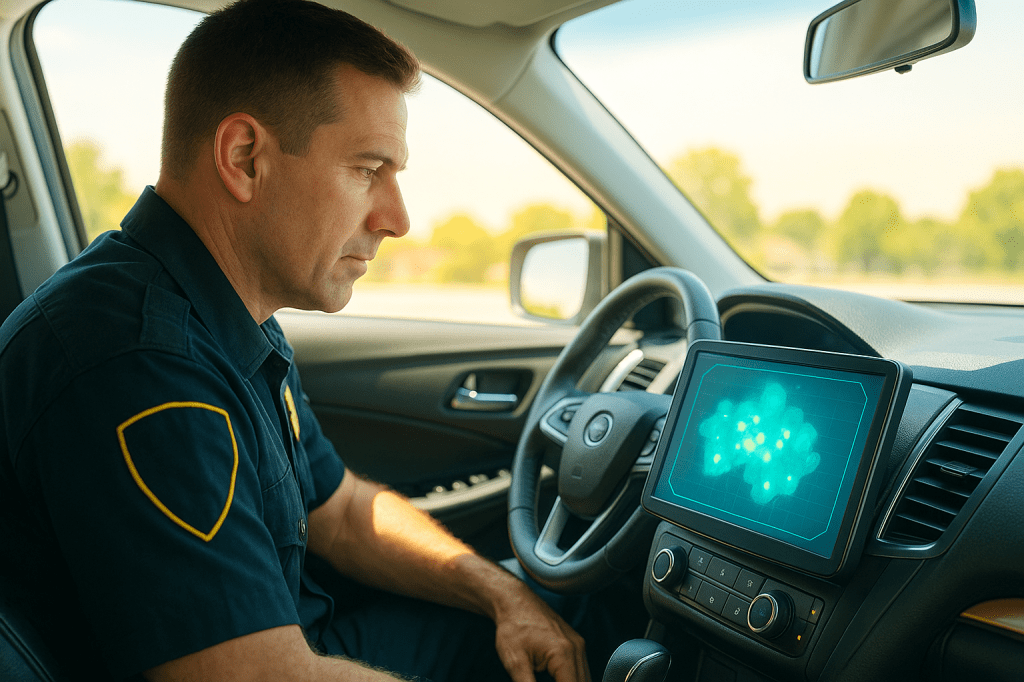
How Police Use AI Today
The Upside—Speed and Safety
- Faster help. Gunshot alerts and licence-plate hits reach officers in seconds, not minutes.
- Eyes on everything. AI watches hundreds of cameras and only pings a human when something looks wrong.
- Better evidence. Time-stamped audio clips or licence-plate images reduce detective hours and court challenges.
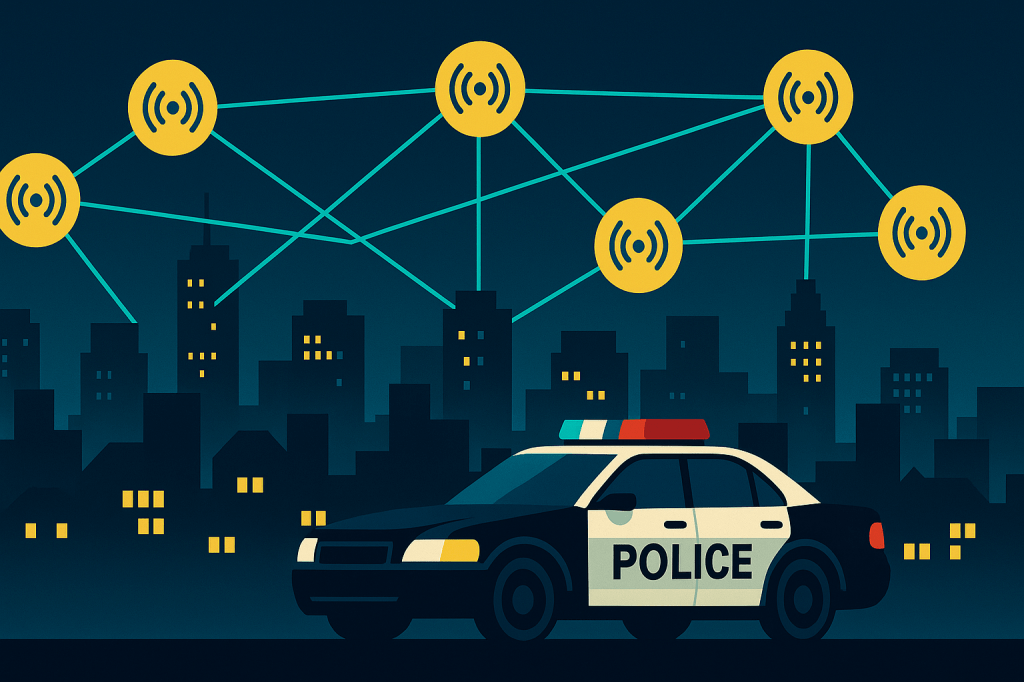
Doing more with less. Predictive patrol tools help departments facing staffing shortages allocate cars where they’re needed most
| Risk | What could go wrong? | Example finding |
| Historical bias baked in | Old arrest data may target the same neighborhoods again. | Acoustic alerts deployed mainly in minority areas may draw extra patrols. |
| False positives | A wrong face or plate can lead to mistaken stops. | Acoustic alerts deployed mainly in minority areas may draw extra patrols. |
| Privacy leakage | Licence-plate data shared with out-of-state agencies—sometimes against state law. | Acoustic alerts deployed mainly in minority areas may draw extra patrols. |
| Over-policing | Acoustic alerts deployed mainly in minority areas may draw extra patrols. | EPIC petitioned DOJ to review gunshot-sensor placement for civil-rights impact |
Guard-Rails That Keep AI a “Helpful Partner”
- Open scorecards. Publish monthly accuracy and false-alarm numbers for every AI tool.
- Human check. Require an officer to confirm any match before stopping a person or vehicle.
- Data diet. Trim or re-weight biased historical data; delete raw clips quickly (RASTA keeps only 1-s gunshot snippets).
- Limited sharing. Restrict ALPR and sensor data to investigating agencies; no bulk sales or blanket MOUs.
- Sunset clauses. Re-approve any AI system every few years—or when major code changes.
Where RASTA Fits
We focus on acoustic detection only—no cameras, no face search.
- Edge processing: Sound is analysed inside the sensor; normal speech is ignored.
- Low false-alert rate: < 1 % in pilot cities, thanks to a diverse gunshot/firework training set.
- Transparent metrics: Agencies get monthly accuracy reports ready to share with the public.

Bottom Line
AI can help officers get to the right place fast, with better intel and less paperwork.
Yet if data are skewed or oversight is weak, the same tools can erode trust. The path forward is clear rules—audit, explain, and give humans the final say. Want to hear (literally) how responsible AI sounds?
Schedule a quick demo call to see RASTA’s acoustic alerts in action : https://calendly.com/rasta-startup
 RASTA
RASTA 